

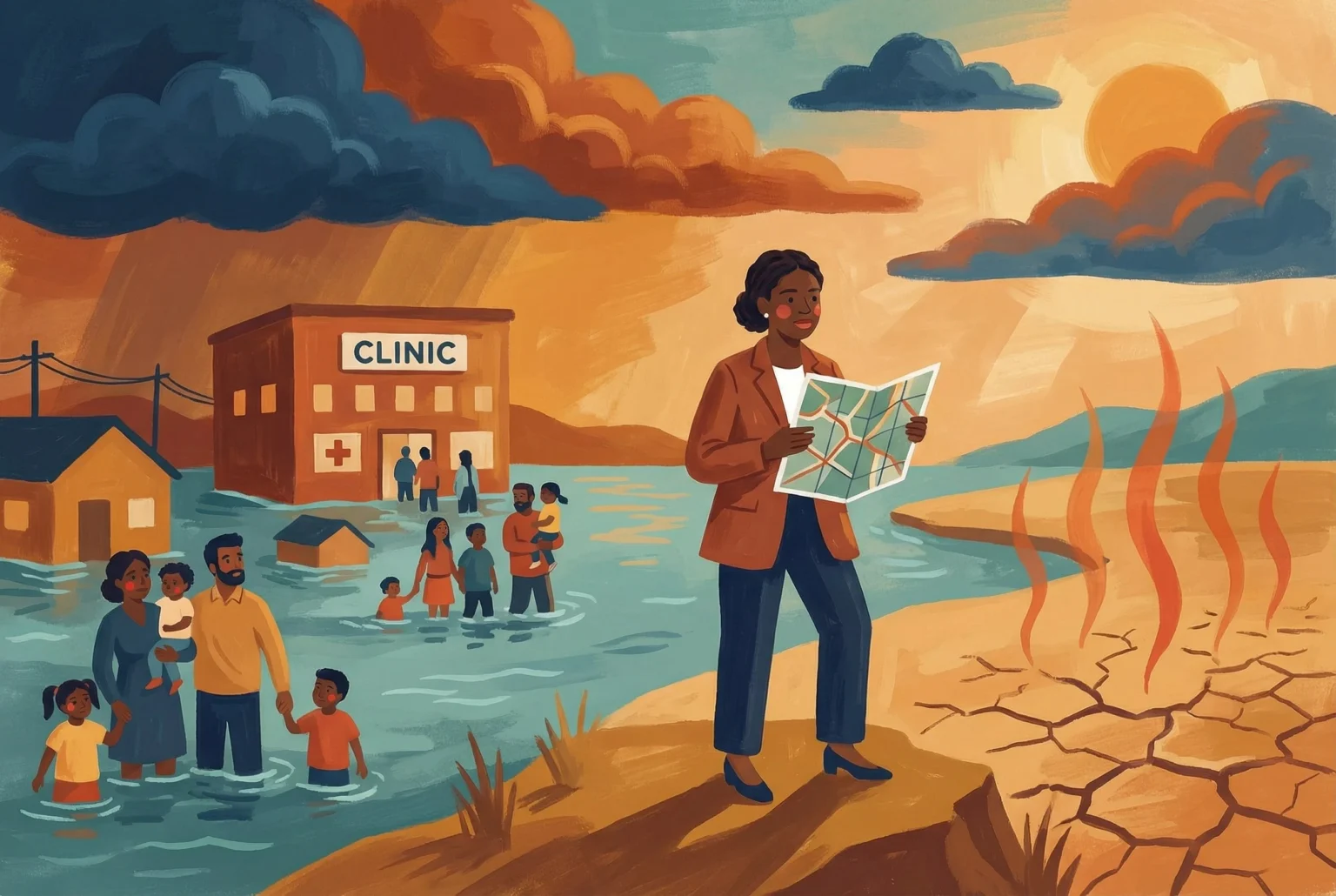
Navigating the intersection of climate disruption, systemic vulnerability, and institutional resilience.
The climate crisis is no longer a distant environmental threat; it is the most significant public health challenge of the 21st century. As extreme weather events, rising temperatures, and resource insecurity escalate, the impacts on global population health are becoming increasingly severe. The WHO projects that climate disruption will cause hundreds of thousands of additional deaths annually in the coming decades, driven by undernutrition, infectious diseases, and heat stress. Crucially, the health impacts of climate change are not distributed equally. Climate disruption acts as a threat multiplier, exacerbating existing social vulnerabilities and disproportionately affecting marginalized communities. Furthermore, climate-driven geographic displacement is placing immense, unprecedented pressure on public health systems and social infrastructure, creating complex challenges for cross-border collaboration and regulatory adaptation.
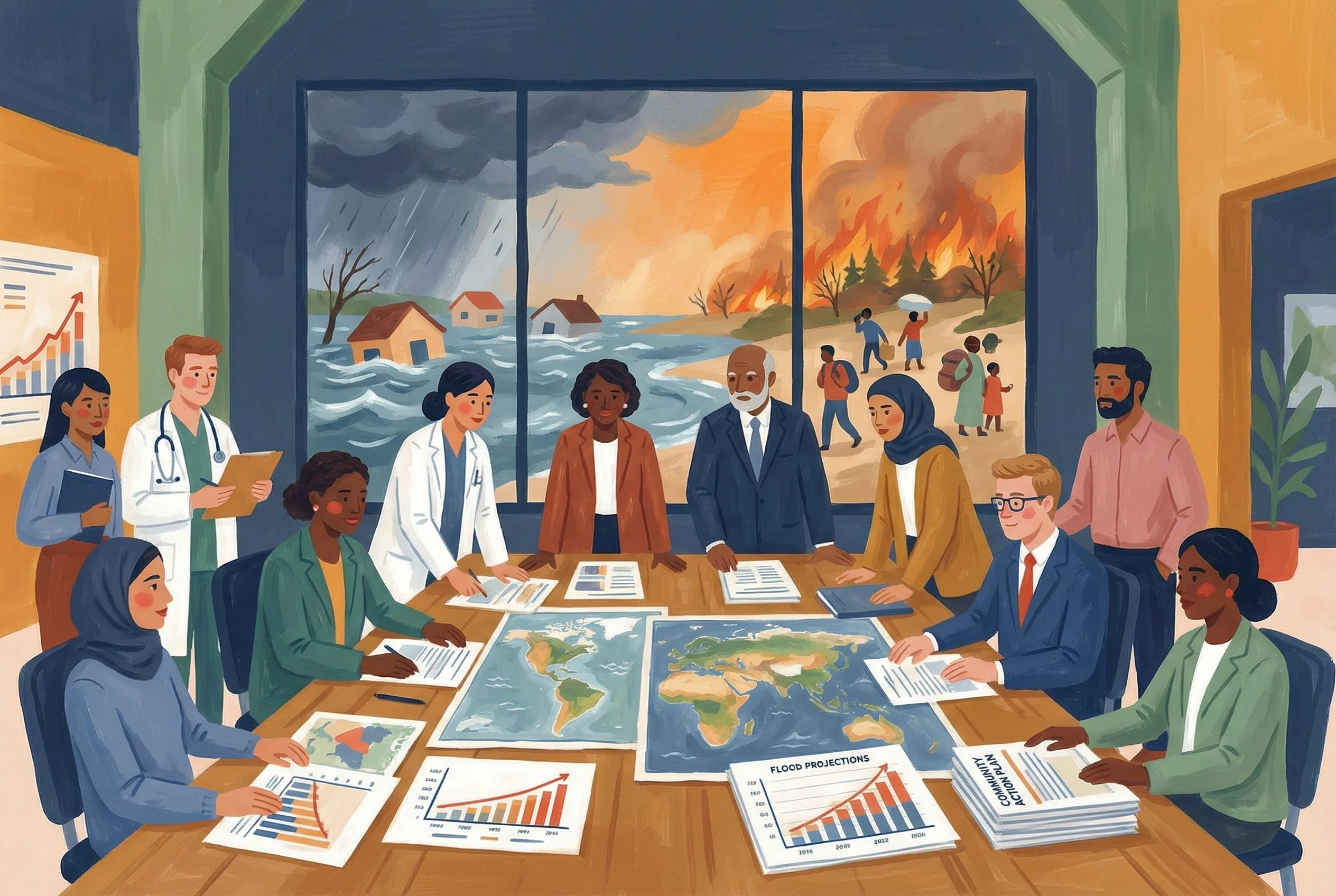
For health systems and public sector institutions, preparing for these realities requires immediate, forward-looking strategic action. Institutions must develop climate-resilient operational frameworks that account for shifting demographic patterns and increased systemic stress. This involves conducting rigorous environmental scan reviews, updating risk management protocols, and ensuring that climate adaptation strategies are fundamentally grounded in health equity. The organizations that will succeed in this new era are those that proactively align their governance and policy structures with the realities of a changing climate.